
Do you need a new website?
Or a website at all? Short answer: if people look you up before they book, buy or walk in, yes. Here is the long answer, starting with the best argument against one.
“No one looks at websites. Everyone uses Google and social media these days. Websites are a waste of time and money.”
True
Most people find a local business on Google, not by typing in its address.
But
Google ranks you partly on your website. Its own guide to local ranking says your position in regular web results counts toward your map listing.
True
Your clients live on Instagram and TikTok.
But
A profile is rented space. The app decides who sees your posts, and it changes the rules without asking you.
True
A bad website is a waste of money.
But
That is a case against bad websites. Old hours, broken links and a template look do cost you, which is why the site should be done right and kept current.
Google and social media are where people find you. Your website is where they decide.
Five jobs a website does that a profile can't.
None of this replaces Google or Instagram. It makes them work harder for you.
Get found when people search nearby
Most people looking for a service near them start on a search engine. A website gives Google something to read: what you do, where, for whom and at what price. The more useful and current that is, the more searches you show up for. That is all SEO really means.
It lifts your Google Business Profile too, the map listing with your hours and reviews, because Google counts how your site ranks when it ranks the listing.
Source: Google Business Profile Help, “Tips to improve your local ranking on Google”.
Look established before you say a word
People size up a business by its site in a blink, and many hesitate to visit one they cannot find online at all. A site that is clear, fast and current says you are real, you are open, and you take your work seriously. A missing one leaves them to guess.
In a Stanford study of over 2,500 people, the look of a site was the reason they cited most for trusting it or not (Fogg et al.). First impressions of a page form in about 50 milliseconds (Lindgaard et al.).
Own your storefront instead of renting one
Social apps and directories are useful, and they are not yours. They change their algorithms, decide which of your reviews to show, sell ads to your competitors on your own listing, and charge you to change any of it. Your website is the one place online where the layout, the prices, the photos and the words are yours.
The first visit will probably still come through Google, Instagram or a booking app. Your site is how you keep that person: an email list, a newsletter, a loyalty offer, gift cards, seasonal specials, a giveaway. Followers belong to the app. An email list belongs to you.
You can even lose the cookie-cutter look of booking apps. The booking system you already use, or one built just for you, can live right inside your website, in your branding and shaped around how you actually work.
On the menu: your current booking app, connected and styled to match, $200. Custom booking built in, $400.
Answer the questions before they are asked
Your full service list, prices, hours, location, policies and FAQ, in one place that is always right. Fewer “how much?” and “are you open Sunday?” messages for you, and fewer clients who give up waiting for a reply.
Take bookings and payments without the middleman’s cut
On your own site you choose the payment processor and the booking tool, built in or linked out. Website builders and marketplaces often add a fee of their own on top of card processing, which keeps getting more expensive on its own. Your site does not have to add anything.
See it before you buy it.
Salon sites with live booking, a 3D polish bar, and contractor homepages shown whole. Real screens from sites I built.
See my work


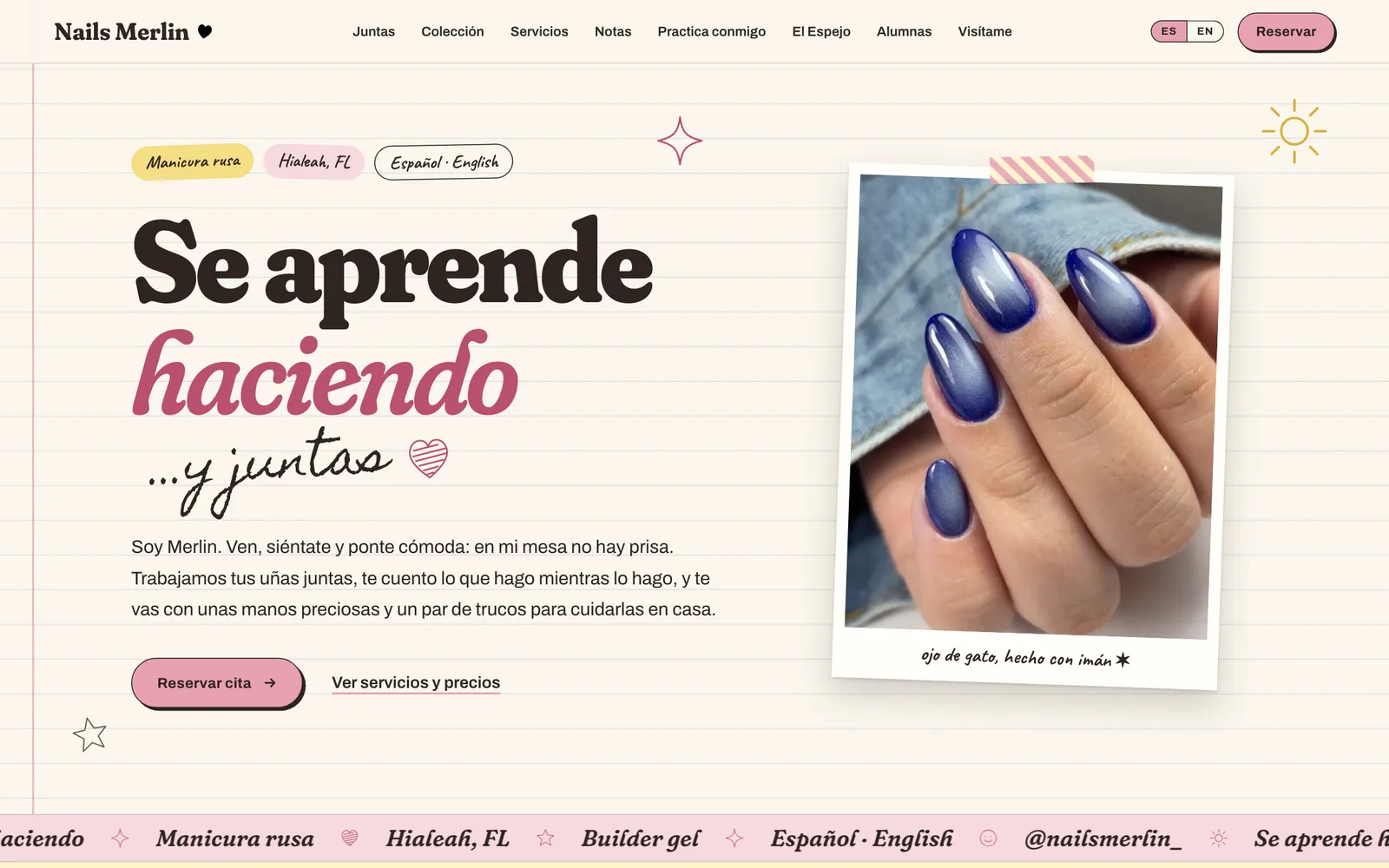
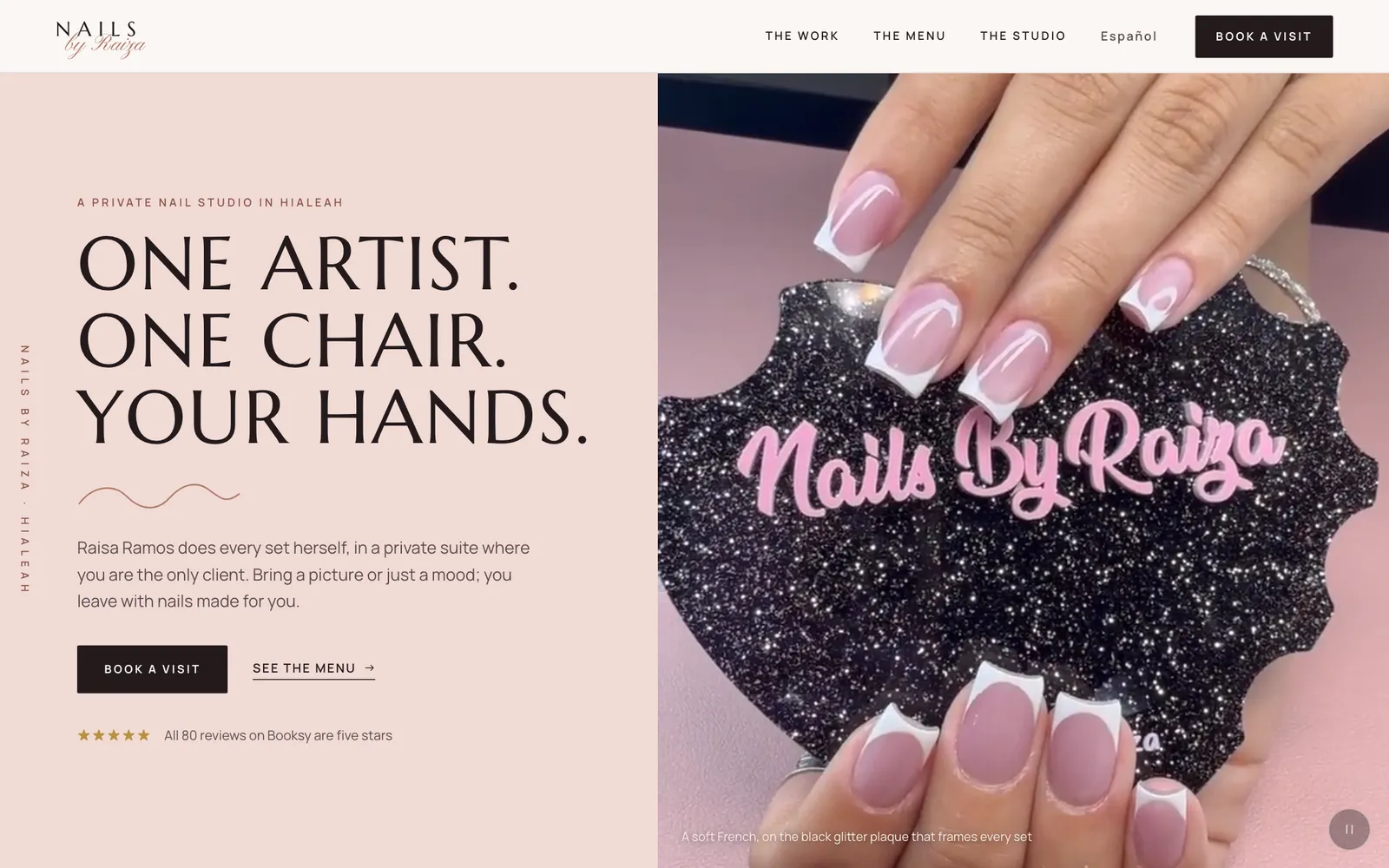
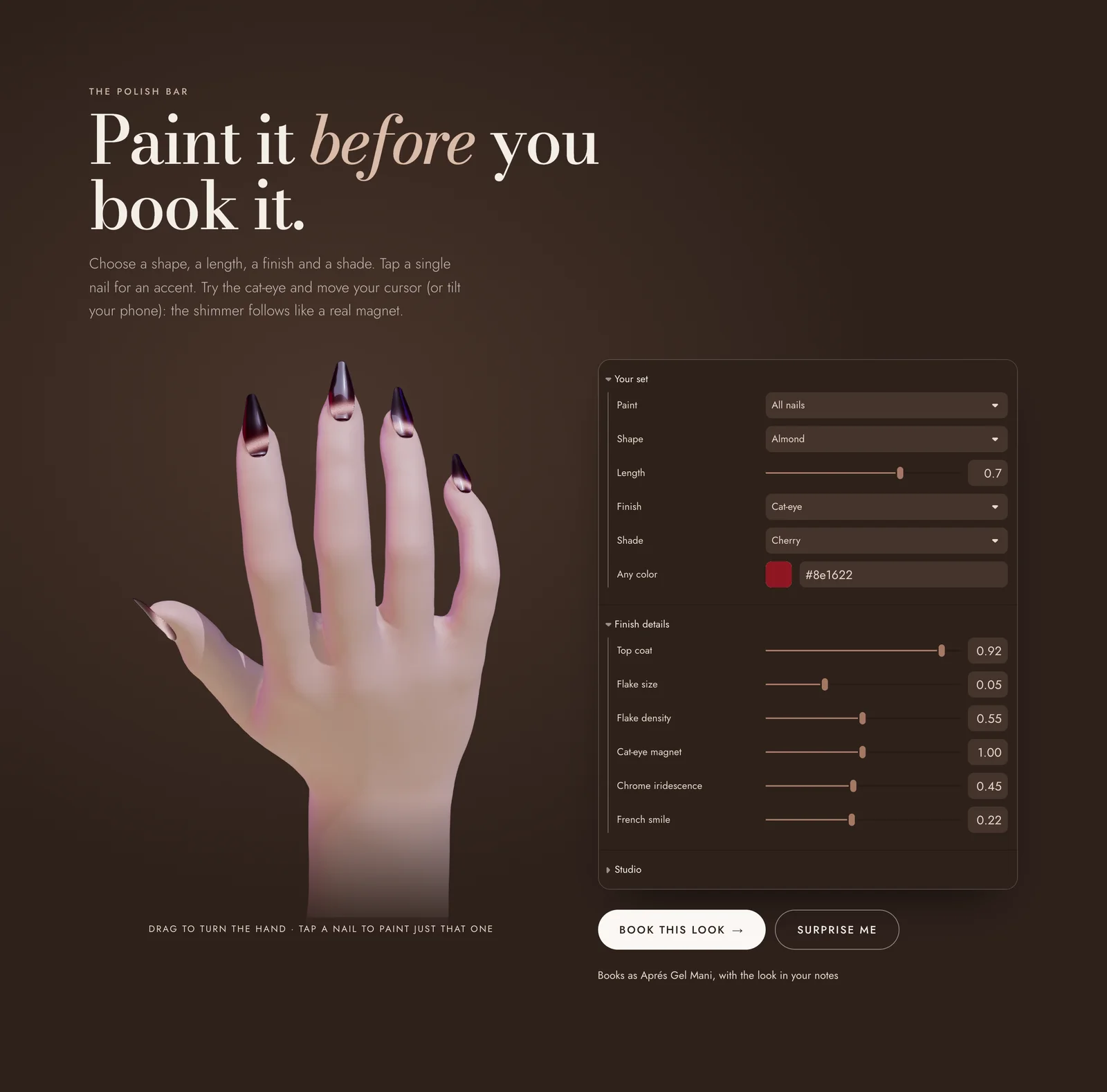
Two real downsides. I take care of both.
A website is not free, and it is not finished the day it launches.
It costs money or time
Either you pay a designer, or you spend your evenings building it yourself, usually on a template that ends up looking like the template.
Built from scratch, the one-page website is $400 and the multi-page website is $600. Connecting your domain, integrating your booking or other systems, and every other add-on are priced up front, so you know the total before you start. Half to start, half at launch. You send your photos and your words; I do the rest, in about two weeks.
It needs looking after
An outdated site, with last year’s prices, old hours or broken links, can hurt your reputation faster than having no site at all.
Optional hosting from $15 a month keeps it online and secure. From $25, I keep it current too: hours, prices, a new photo. Month to month, no contract. Or add the self-edit panel ($300) and change it yourself.
Already have a site that has gone stale? A redesign is $300. Start with a free checkup